After 40 years of decline, Youngstown, Ohio, was one of America’s most distressed cities, with parks in disrepair, blocks of vacant houses lacking windows and doors, unmowed vacant lots used as dumps for rubbish of all sorts, even boats.
Residents watched entire neighborhoods deteriorate as a result of abandoned properties that had been decaying for years on otherwise stable blocks. Finally in 2005, the City of Youngstown adopted the Youngstown 2010 Plan—the city’s first comprehensive plan in years. But city leaders soon learned that a plan alone is not enough to address decades of neglect. Significant effort was needed to develop the capacity necessary to realize the plan’s goals, which included neighborhood stabilization and vacant property reclamation. In the fall of 2008, a group of neighborhood and community leaders from Youngstown—with support from the Mahoning Valley Organizing Collaborative, The Raymond John Wean Foundation, and the City of Youngstown—began meeting to discuss the creation of a citywide community development corporation as a key component of a broader vacant-property organizing campaign.
In January 2009, the Mahoning Valley Organizing Collaborative released results of the first comprehensive vacancy survey ever completed in Youngstown. The survey, administered by more than 150 trained neighborhood leaders and volunteers, showed that there were 4,566 vacant buildings and 23,000 vacant lots in a city with just over 65,000 residents. It was time to wake up.
A Response to Overwhelming Vacancy
Shortly after the survey results were released, the group of leaders who had met to discuss the creation of a CDC became the inaugural board of the Youngstown Neighborhood Development Corporation (YNDC), incorporated in 2009. The decision to create a CDC was counter to the trend at the time when many community organizations began to struggle and others ceased to exist due to declining resources and the foreclosure crisis. The organization’s leaders understood this but also knew that neighborhood conditions and vacancy could not be addressed without effective community capacity.
In 2010, Youngstown’s population was 66,982, down approximately 48,000 from 30 years earlier and down more than 60 percent from the city’s peak population of 170,002 in 1930. This dramatic loss of population created an urgent situation that was clearly illustrated by the city’s physical condition. YNDC, where I serve as executive director, was formed to address these issues, and in 2010, with minimal resources, it set out to do just that in the city’s Idora neighborhood.
Start Simple
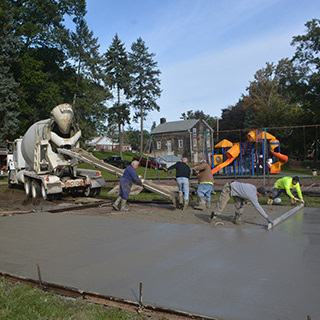
The Idora neighborhood is one of Youngstown’s many transitional or middle neighborhoods—defined as an area that is on the edge of growth and decline. At the time, it had approximately 200 vacant homes and was the only neighborhood in Youngstown to have a detailed neighborhood plan along with an engaged neighborhood association. That neighborhood plan would serve, in part, as a model for our many future neighborhood action plans. YNDC’s small team began organizing neighbors, church members, and community groups to clean and board up vacant properties. We knew that simply cleaning up vacant homes was not good enough, but we had to start somewhere and show tangible results in a target geography. In this same neighborhood, YNDC also began the cleanup, greening, and routine maintenance of more than 150 vacant lots that had become overgrown dumping grounds. We modeled our vacant lot program on Philadelphia LandCare, a program of the Pennsylvania Horticultural Society, and sought the guidance of Bob Grossman at the Pennsylvania Horticultural Society. The program didn’t cost much but it made a significant impact to the community by cleaning up long-abandoned vacant lots and creating maintained and functional greenspace. This simple intervention demonstrated that someone cared for the space and began to change the overall feeling in the neighborhood. It remains a critical component of our neighborhood stabilization activities, and is now also employed by the Mahoning County Land Bank after demolition. Once a vacant house is demolished by the land bank, the lot is graded and seeded, trees are planted, and split rail fencing is installed.
Our decision to start with this simple approach of cleaning up vacant properties was motivated by advice from other more experienced CDC leaders—most notably Marie Kittredge, who at the time worked at Slavic Village Development of Cleveland. Kittredge advised YNDC to start with simple and effective projects instead of complex housing or real estate development, and that was the key to our initial success. As we completed this basic vacant property stabilization work, YNDC continued to aggressively build financial and human resource capacity and partnerships.
Data, Data, Data
Over the next three to four years, YNDC further developed our capacity, and in 2014, we began one of many formal partnerships with the City of Youngstown to develop Neighborhood Action Plans. While the city had a comprehensive plan, it did not have parcel-level neighborhood plans that could be easily translated into action and progress. The neighborhood action planning process was designed to create plans based on residents’ priorities, and after talking directly with more than 1,000 residents, it was clear that the priorities were the basics: housing and property conditions, infrastructure, safety, and jobs. To engage residents we attended existing block watch and neighborhood association meetings, held public meetings at churches, parks, and other neighborhood institutions, went door to door, and aggressively used media, social media, and neighborhood networks. With the resident engagement process underway, YNDC simultaneously developed a comprehensive report on neighborhood conditions and a market segmentation analysis to provide a snapshot of overall neighborhood health. With this analysis as our guide, YNDC began developing a plan for action with a focus on the city’s transitional or middle neighborhoods because they must be stabilized if any city is to have a long-term future. If the city’s middle neighborhoods become weak or extremely weak, the city will no longer be able to sustain itself.
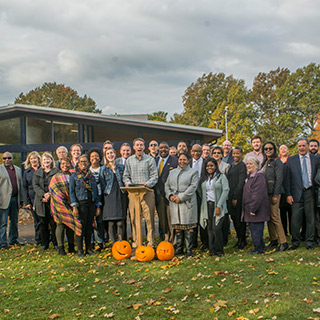
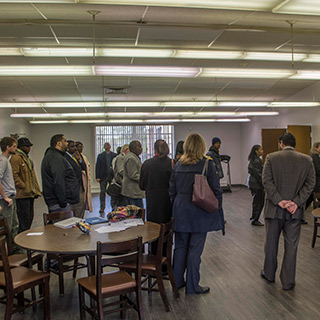
Neighborhood leaders from across the city prioritize issues at a citywide action team meeting. Photo courtesy of the Youngstown Neighborhood Development Corporation
The goal of the neighborhood action plans is to stabilize and grow the city’s transitional neighborhoods by improving the market conditions and quality of life. Improving market conditions requires the improvement of overall property conditions, proactive efforts to improve neighborhood perception, ongoing engagement of neighbors and block building, and development of market-rate, market-ready housing with an initial focus on the existing vacant housing stock, among other initiatives.
Market building is critical in a place like Youngstown, where property values have declined dramatically to a point where the market no longer functions in many parts of the city, and in other parts increasingly inhibits investment. For instance, in 1978 my parents purchased the house I grew up in for $24,000. It was a home on the north side of Youngstown that was in need of repair. They sold the same house 35 years later in good condition for $20,000. This same story is repeated throughout Youngstown and the entire Midwest. This story has resulted in a loss of great wealth for millions of people who live in these places and is part of the vicious cycle of vacancy. The goal of market building is to change these conditions by increasing property values and overall neighborhood confidence, thereby building equity for existing homeowners and increasing the likelihood of investment in vacant properties. There are many simultaneous actions that must be taken to achieve this goal, and in Youngstown, they are driven by our neighborhood action plans.
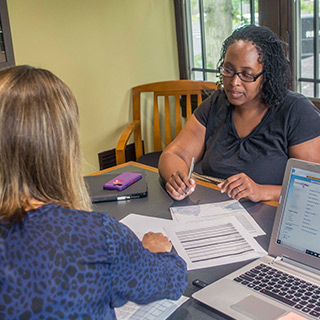
The first step in developing neighborhood action plans is the easier-said-than-done process of collecting all the necessary data. For the housing and property section of each plan, a detailed neighborhood property survey is completed to determine occupancy status, code violations, vacant lot maintenance, and dumping. This data is collected in the field and then coupled with publicly available data from local government by our mapping and data analysis partners at Youngstown State University’s Center for Urban and Regional Studies (YSU) to clearly determine the status of each property. The data informs the development of a specific strategy for each property and also serves as a baseline from which to evaluate future progress. The housing and property strategies include demolition, vacant home rehabilitation, owner-occupied home repair, code enforcement, vacant lot greening, and maintenance. Yes, every property in the plan target area is assigned a strategy based on the property’s current condition. The property strategy implementation is prioritized in each plan beginning with the 25 most significant projects.
The data collection is completed by a team of AmeriCorps VISTAs and interns using survey software and a standard survey methodology in the field. The data is then reviewed, cleaned, mapped, analyzed, and maintained by our partner at YSU. This data-collection process is repeated several times per year so plans can be adjusted and progress evaluated against the baseline data. Building ongoing data collection infrastructure is critical to creating a vacant property reclamation strategy that can be evaluated, with results communicated clearly, and ultimately prove effective. This is an ongoing process that must be a significant component of any large-scale vacant property reclamation strategy if it is to be successful.
Before the plans were complete, YNDC began to assemble Neighborhood Action Teams. Each Neighborhood Action Plan area was appointed a Neighborhood Action Team composed of residents and representatives of neighborhood organizations, anchor institutions, relevant city departments, the Mahoning County Land Bank, and nonprofits serving the particular neighborhood. The purpose of each Neighborhood Action Team is to prioritize projects, implement the plan, track and communicate results, and create mutual accountability among all parties.
Getting the Work Done
Throughout the neighborhood action planning process, YNDC continued to wrestle with the question of how to address vacant properties. As of 2014, YNDC managed an owner-occupied home repair program to assist low-income homeowners, was a HUD-approved Housing Counseling Agency, renovated vacant homes for sale to homeowners, operated a community loan fund, held regular community workdays, and greened and maintained vacant land; but the scale of these efforts was not enough. How could YNDC renovate more properties and do it without grant subsidy? How could YNDC board up more abandoned houses and regularly maintain them? How could YNDC more effectively revitalize the community? These are questions that we, along with many of our peer organizations, continue to struggle with.
YNDC construction team members renovate a 90-year-old, four-unit apartment. Photo courtesy of the Youngstown Neighborhood Development Corporation
YNDC decided it was time to do things differently, and in 2014, we became our own developer and general contractor to reduce costs and renovate more vacant housing. YNDC developed a formal agreement with the Mahoning County Land Bank to acquire for a nominal fee vacant houses in areas that had a Neighborhood Action Plan and share revenue on the back end if there was any above and beyond all our hard and soft costs. YNDC developed an in-house construction team consisting of a licensed electrician, two carpenters, a tiler, a painter, and general laborers. We also built an AmeriCorps direct service program, the first AmeriCorps program with this focus in Ohio, to serve as an entry point for residents to learn basic construction and landscaping skills with a goal of gaining employment in the field upon program completion. YNDC continued to increase our mobilization of volunteers to clean out vacant houses and prep them for construction. At one winter workday in 2017, YNDC hosted more than 100 volunteers to clean out and prepare a home for rehabilitation. Our goal was to get more done, and these efforts have since resulted in 108 renovated vacant homes and counting. The focus of our renovations was to create market-rate, market-ready housing for owner occupants with the caveat that in Youngstown, the market rate for a renovated house is between $50,000 and $85,000, a price that remains affordable to a large section of the population. Additionally, we have begun to develop high-quality affordable rental properties, as most of the city’s rental housing stock is very low quality.
YNDC also developed a program to more efficiently and effectively board up and routinely cut the grass at unmaintained vacant homes while assessing property owners for the cost. From 2015 to 2017, the frequency of grass cutting more than tripled citywide and over 2,000 homes were cleaned and boarded while the city collected more money than it was paying out for these services due to the professional management, documentation, and updated collections process which allowed the city to assess any unpaid collections to the property tax. Again, to increase the scale of work, YNDC partnered with volunteers. Many residents, churches, student groups from the university, and the United Way assisted in these efforts.
During this time, the Mahoning County Land Bank received the first of multiple grant awards totaling nearly $13 million for demolition and greening of tax-delinquent vacant homes in the county.
While these advances in capacity and resources were important, what was even more critical was the alignment of city government, the Mahoning County Land Bank, YNDC, Youngstown State University’s Center for Urban and Regional Studies, neighborhood groups, and other stakeholders in achieving results. An example of this alignment is the Mahoning County Land Bank’s selection of the same target areas for acquisition, demolition, and greening as the Neighborhood Action Plan process. Additionally city code enforcement began to proactively prioritize properties based on the plans and began regular communication and referrals to YNDC and other community agencies for low-income homeowners who needed assistance. This happened by building relationships among all the stakeholders and engaging them in the process from the start. The Neighborhood Action Teams, facilitated by YNDC on behalf of the City of Youngstown, maintained this alignment for several years.
These partnerships began to result in housing and property issues being collectively addressed in our middle neighborhoods. As simple and commonsense as it sounds, this hadn’t been a frequent occurrence in the past. It was quite rare for a vacant home to be renovated, a slumlord to be targeted with code enforcement, a house to be boarded up, and the worst house torn down and property greened on the same block at the same time.
As our team of partners began to see some early results from this coordinated approach, we also determined we would need to use more of our collective tools and create new ones with our plans and Market Segmentation Analysis as a guide. The city began to use more code enforcement tools including criminal and administrative penalties, assessing property owners for nuisance abatement actions such as grass cutting and boarding up, and even spot-blight eminent domain for the most egregious offenders. We created new programs such as the grass cutting and board up program that would begin to pay for itself and increase quality of life citywide and our Live Youngstown program that uses enterprise funding to assist in renovating a larger number of vacant properties.
Throughout the process of Neighborhood Action Plan implementation, YNDC:
- Remained the engine driving the process.
- Regularly collected data to track progress and update priorities.
- Convened the Neighborhood Action Teams, providing data to the city and land bank to prioritize property intervention.
- Worked with and served as fiscal agent for resident-led improvement projects.
- Took low-income homeowners prioritized by code enforcement for assistance.
- Developed materials to clearly highlight and communicate progress to the public.
- Did the work to repair occupied homes, renovate vacant homes and buildings, and maintain vacant land.
In this regard, YNDC’s work is unique among many community development corporations as we have taken the lead on a process to develop plans in multiple neighborhoods, facilitate and coordinate implementation activity across public and nonprofit stakeholders, and complete much of the work ourselves by hiring and training residents. As an organization we remain focused on action and results and have designed everything we do to that end—beginning with our data collection and planning and continuing through our work.
Results Over the Years
This process has begun to yield real results across the Neighborhood Action Team areas. Over the past three years, YNDC has repaired or rehabilitated 116 properties, the city has used code enforcement to achieve code compliance on 196 properties with significant code issues, 351 vacant lots have been improved, 5 parks received major facility and equipment upgrades, and hundreds of homes have been demolished. In addition, the basics identified as the highest priorities by residents have improved dramatically with more than 2,000 homes being cleaned and boarded and a significant increase in the frequency of routine grass cutting at vacant properties.
From 2015 to 2017 in Pleasant Grove, one of the city’s transitional neighborhoods, 27 properties were brought into compliance through code enforcement, 5 vacant properties were fully renovated, and 24 vacant properties were demolished, among many other improvements. This has resulted in a 41 percent decrease in vacancy, a 31 percent increase in median home sale price, and a 27 percent decrease in violent and property crimes. Prior to the action plan and subsequent implementation these numbers were all headed in another direction and the neighborhood was in clear decline.
Lessons Learned
YNDC learned many lessons throughout this process, and some are worth sharing for communities that seek to reclaim vacant properties.
- Nothing will get done without capacity. Youngstown has gone from having very little neighborhood development capacity to having a high-functioning community development corporation and county land bank within an eight-year period. We were able to build capacity by organizing residents with strong and ongoing support from a local foundation, The Raymond John Wean Foundation, which continues to provide significant general operating support to YNDC on an annual basis. This support was critical to allowing the organization to attract talent from the start and to have resources to begin work. The city also provided funding and continues to be a major supporter of our work. Capacity can be built even in a highly distressed community.
- Build the infrastructure to collect qualitative and quantitative data on an ongoing basis. Collect data in the field and talk with neighbors as this provides additional neighborhood intelligence that will not appear in field surveys. This requires financial and human resources. For years I went to neighborhood meetings and no one was able to clearly communicate a strategy and progress to constituents. You cannot build, execute, and evaluate an effective strategy without this.
- When you have minimal resources, you must have a defined target area for your plan and work.
- Start simple, make visible progress, and communicate results. In communities that have experienced decline for decades, residents are hungry for action and results. Create results—as simple as they may be—and communicate them.
- It’s not possible for one organization to do everything that needs to be done and it’s critical that city government, the land bank, CDCs, neighbors, and other stakeholders work from the same playbook and communicate and coordinate regularly. Much more will get done with this approach, and there will be a real, visible impact.
- Do not constrain yourself to existing funding or the standard partners or parameters. Do not accept no for an answer. Create your our own solutions, whether that be building your own development and construction operation to reactivate vacant homes, developing an AmeriCorps direct-service program focused on vacant homes, using local enterprise funding to activate more properties, crowdfunding, engaging more residents and other stakeholders in planning and doing, or identifying a new approach to addressing the basics—boarding up and cutting grass—at an overwhelming number of vacant properties. Do what it takes to get the work done.
- There is no singular strategy that will work. Many strategies are needed to address vacancy on one block or in one neighborhood. Develop an understanding of all the tools you have at your disposal and use them.
- Code enforcement,
- Demolition,
- Renovation of vacant homes to create market-rate market-ready housing,
- Greening and management of vacant land,
- Resources for low- to moderate-income homeowners to maintain their homes,
- Building neighborhood capacity and leadership to get work done.
- Do not plan to plan. Plan to do. There have been many grand plans in cities like Youngstown. Very few have resulted in neighborhood change.
While Youngstown continues to face tremendous challenges, the vacant property and physical conditions have improved significantly in the past five years. It’s now rare to see a wide-open house or a vacant home in a middle neighborhood without a planned intervention, and we continue to focus our resources to increase capacity and scale so that even greater progress can be made over the next five years and beyond. Revitalize.
To read the article in Shelterforce Magazine, click here.
 Sitemap
 ,
,  ,
,  ,
,  ,
,  ,
,  ,
, 
 ,
,