Neighborhoods


Strategic Neighborhood Transformation

Sidebar images:
Body:

Monday, June 5, 2017

YNDC was awarded a $10,000 grant from the Wells Fargo
Housing Foundation.

The funds will benefit the HUD-approved Housing Counseling program at
YNDC. The housing counseling program helps those with credit or financial problems address those issues, secure a bank loan, and become homeowners. So far in 2017, 107 new people have signed up for housing counseling at YNDC. We would like to thank the Wells Fargo Housing Foundation for their
generous donation.

Sidebar images:
Body:

Like animals stirring
from hibernation, the annual emergence of lawn mowers from their dingy winter
shelters is a reliable indicator that winter is finally gone.

As the weather
warms and the grass grows, giving the lawn a once-over becomes a weekly ritual
for many. Up until 2015, the lawns that escaped that ritual ended up long and
unkempt and eventually were cut by contractors hired by the city, often
resulting in some 3,000 city-funded cuts each year. Since taking over the
business of cutting neglected lawns in 2015, the Youngstown Neighborhood
Development Corp.’s grass-cutting crew has increased the annual number of cuts
across the city to more than 10,000, while cutting the overall cost to the
city. The city formerly paid between $35 and $50 per cut to hire contractors to
mow the lawns. Today, the city pays the YNDC $10 per cut, allowing it to
increase the cuts without growing the price tag for the city. Ian Beniston,
YNDC executive director, said the dramatic increase in cuts largely can be
attributed to a change in the way problem lawns are identified. The city
previously cut neglected lawns only after a complaint was filed. Today,
complaints still play a large role in directing mowing efforts, but the YNDC
also conducts field surveys to locate neglected lawns.

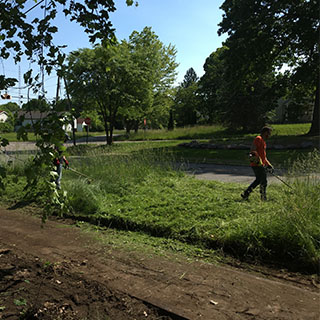
Easy to spot in their neon-yellow shirts, the 11-person YNDC
grass-cutting crew travels the city. It cuts only specific lawns; the lawns
must be located at vacant structures, not abandoned lots and not occupied
structures, and the first time they cut a lawn, the grass height must exceed 8
inches. Occupied structures are handled by city code enforcement, and vacant
lots are cut by the city’s in-house grass-cutting crew. The YNDC cuts aren’t free
– property owners are billed $150 per cut if the grass-cutting team has to pay
a visit. Each morning, the grass-cutting crew is given an efficiency-optimized
route – which is created at YNDC headquarters using an extensive property
database built from citywide survey efforts – before heading out into the city
with zero-turn mowers, weed whackers, leaf blowers and trash bags. They work
10-hour days, six days a week.

Edgardo Velazquez has worked with the grass-cutting team for
four and a half months. He said his experience working for the team has been
positive. “I had been looking for work and saw a posting for the grass-cutting
job at the library,” Velazquez said. “I enjoy the work, I get to be outside,
plus we help people and we can see the physical change in the community.” Between
April and October, the YNDC expects to cut grass at vacant structures
throughout the entire city at least four times over. At the beginning of June,
the team had nearly finished its first full cut of the city. This year, the
team anticipates once again breaking 10,000 cuts, with potentially more if the
conditions allow. “Weather and other factors, such as people maintaining their
lawns or the city demolishing vacant structures, can impact the overall
numbers,” Beniston said. The eventual goal of the YNDC’s mowing efforts is to
lower the number of cuts needed each year as structures are either demolished,
sold to new owners or the current property owners begin to maintain their own
lawns. “We’ve seen that in a lot of instances once property owners see that
we’re actually billing them for the cuts, they start maintaining the lawns
themselves,” Beniston said. Even without lawn mowing, the cutting team has
plenty of work. From October to April, the team guts and prepares structurally
sound abandoned homes for the YNDC to renovate and works to board up condemned
structures. Tom Hetrick, YNDC’s neighborhood planner, said the grass-cutting
team’s work is tough, but added that neighbors often were complimentary after
the team’s efforts. One of those rare, in-person compliments occurred last week
while Velasquez and his team were working on West Dewey Avenue on the city’s
South Side. A neighbor who was watching the group work drove by, slowed down
and thanked them for their “good work.” She then pointed them to another problem
property on the street. One more for the list.

To read the full story from The Vindicator, click here.

Sidebar images:
Body:

Thanks to the Youngstown Neighborhood Development Corporation's grass-cutting crew, the city has increased the annual number of lawns cut across the city to more than 10,000, and also cutting the cost to Youngstown.

The city formerly paid between $35 and $50 per cut to hire contractors to cut the lawns. Today, the city pays the YNDC $10 per cut, allowing it to increase the cuts without growing the price tag for the city.

To read the full story from The Vindicator, click here. 

Sidebar images:
,
Body:

Tuesday, June 6, 2017

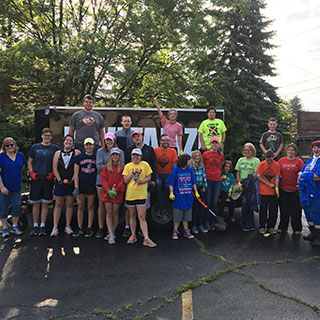
On Saturday, June 3, YNDC team members Tammi Neuscheler and Katie Zetts participated in the Warriors Inc. Unity in the Community Parade. 

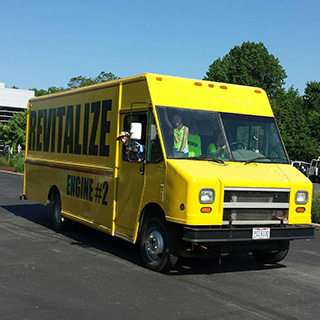
The parade took place on Market Street and marched from Midlothian to Delason, ending at the South Field House. The REVITALIZE truck joined politicians, students, church groups, and other community groups raising awareness for various causes and highlighting resources in the Mahoning Valley.

Sidebar images:
, , , ,
Body:

Tuesday, June 6, 2017

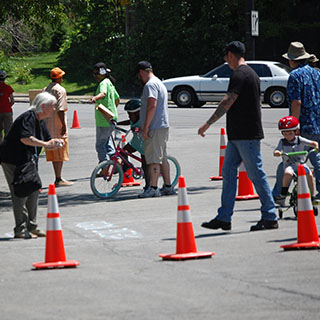
On Saturday, June 3rd, YNDC participated in the Friends of the Mahoning River’s 6th Annual Riverfest by holding a Bike Rodeo at the B&O Station in downtown Youngstown. 

A Bike Rodeo teaches youth the importance of wearing a helmet, how to be safe bicyclists, and provides a space to practice and develop safe biking skills.  Parents were encouraged to sign in and received educational handouts on the proper way to fit a helmet, build skills, safety check a bike, and how to choose a bike based on the child’s height and age.  Youth signed in, demonstrated putting on a helmet properly, and were able to practice biking on two obstacle courses.  The first course focused on the child’s ability to start and stop the bicycle using the pedals without putting feet on the ground.  The second obstacle course took the shape of a figure-eight and youth practiced scanning behind for objects, like cars, before making a turn.  After demonstrating these skills, youth continued riding the course as volunteers discussed different bicycling scenarios and safe ways to navigate their neighborhoods.  Youth and their families were able to address unsafe bicycling behaviors in a safe space.  This event is part of the Safe Routes to School project, a collaboration between the Youngstown Neighborhood Development Corporation and the City of Youngstown.  The projects seeks to improve health and well-being by encouraging youth and their families to become physically active by providing safe, fun ways to walk and bike to school. 

Sidebar images:
Body:

Over the past couple of years, the Valley has lost a lot of its
grocery stores, leaving many people without a place to get food. But, farmers markets are a great way to increase food access to those here in the Valley and to fuel the local economy.

Starting today, both the Warren and Idora Neighborhood
farmers markets kick off. The Warren Farmers Market runs from 3-6 p.m. and the
Idora Neighborhood Farmers Market runs from 4:30-7 p.m. Both markets will be
going on every Tuesday for the rest of the season. “It’s a huge resource for
all the members of the neighborhood and the community,” said Anthony Florig,
Idora Neighborhood Farmers Market. The Idora Neighborhood Farmers Market is
located at 2600 Glenwood Avenue in Youngstown and the Warren Farmers Market is
on Courthouse Square in Warren. Both spots do not have nearby grocery stores. “Grocery
stores are of course an important resource — we all use them. But, a farmers
market shaves so many miles off the food distribution channels,” said Matt
Martin, Warren Farmers Market. These farmers markets offer fruits and
vegetables grown right here in the Valley, like apples, tomatoes and cucumbers.
“We want to promote a local food economy and basically make sure everyone has
access to fresh fruits and vegetables that we have,” Martin said. Both markets
accept food assistance cards and you can double your money. “I can swipe your
Snap card for $30 and you get $60 to spend at the market,” Florig said. Transportation
can be a big problem for those who don’t live near the markets. So, to help
create more access in Warren, Martin says the Warren Farmers Market offers free
transportation to and from the market for anyone living in Warren. “We [want
to] expand the market to include everyone in our city that has limited access
to fresh local food. That’s why we have the double your dollars, the free
transportation,” Martin said. To get a free ride to the Warren Farmers Market,
all you have to do is call or text 330-599-9275.

To read the full story from WKBN, click here.

Sidebar images:
Body:

The Idora Neighborhood Farmers Market
opens at 4:30 p.m. today for the season.

The market is at the corner of
Glenwood and Sherwood avenues here. The outdoor market will be held every
Tuesday from 4:30 p.m. to 7 p.m. through Oct. 3. The opening-day
market is sponsored by Oh Wow! The Roger & Gloria Jones Children’s Center
for Science & Technology, and the museum’s staff will be presenting
science-based kids activities. Vendors this year include Carol’s Homemade Baked
Goods, Marcie’s Jams and More, Lady Buggs Farm, Jack’s Mountain Orchard, Amber
Dawn, OH Baked, It’s the Sauce, Smokin’ Hogs Barbecue Base, Shelli’s Cookies,
Zaney Pearl Farm, Pancake Maples, James Natural Products, The Dough House and
more. Special guests on opening day include the Pop-Up Library and the Pathways
Hub. The Big Green Thing food truck also will be parked at the market to offer
a quick and healthy dinner option. The Idora Neighborhood Farmers Market accepts
the Ohio Direction card (EBT/food stamp cards), Women, Infants, and Children
farmers market coupons and individual vendors accept Senior Farmers’ Market
Nutrition Program coupons. In addition, the market can double purchases for
individuals using a food stamp card up to $30 per market visit. The Idora
Neighborhood Farmers’ Market is hosted by the Youngstown Neighborhood
Development Corp. For more information or to become a vendor, call Anthony
Florig at 330 480 0423.

To read the whole story from The Business Journal, click here. 

Sidebar images:
Body:

Wednesday, June 7, 2017

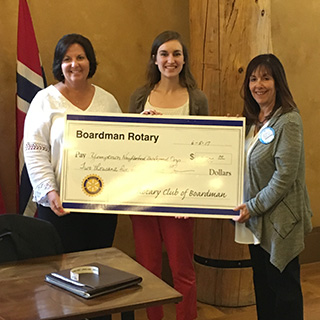
The Boardman Rotary has donated $2,500 to the Idora Community Workday taking place on June 17.

The funds will help to improve the landscaping on the island at the intersection of Glenwood Avenue and Midlothian Boulevard. The island has a large Welcome to Boardman/Youngstown sign and flowering perennials will be added to the landscaping bed. The funds will also be used to landscape 3726 Glenwood Avenue in conjunction with YNDC's rehabilitation of the property. 

Sidebar images:
, , ,
Body:

Monday, June 12, 2017

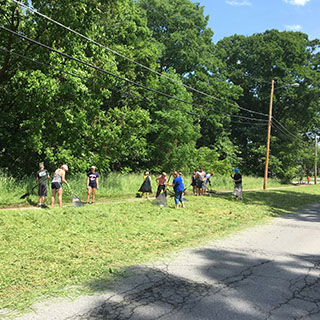
On Saturday, June 10, fourteen volunteers helped clean up the Powerstown Neighborhood.

Volunteers from the Eastgate Regional Council of Governments, the Powerstown Block Watch, the Powerstown Neighborhood Action Team, and Valley Presbyterian Church in Chagrin Falls helped to remove 12 tires, scrape 478 linear feet of sidewalk and remove 50 cubic yards of debris. One property was boarded with 10 openings secured in total. Special thanks to Veynovich Properties for donating
pizza and water to the event. 

Sidebar images:
Body:

Training is underway in some cities in northeast Ohio as
officials and firefighters prepare for the changes related to the state’s new
law banning the use of plywood to board up some vacant and abandoned residential
properties in foreclosure.

The new law took effect in early April and is part
of House Bill 463, which revamped the residential foreclosure process,
including allowing a mortgagee to file a motion with the court to speed up the
procedure on the basis that the property is vacant and abandoned. Irving
Sugerman, a partner at Brouse McDowell and law director for several townships
and villages, said the law pertains to properties in which the mortgagee has
been granted the right to expedite the foreclosure. Under Sec. 2308.02 of the
new law “a mortgagee who files a foreclosure action on a residential property
may file a motion with the court to proceed in an expedited manner under this
section on the basis that the property is vacant and abandoned.” Sec. 2308.031
states, “No person shall use plywood to secure real property that is deemed
vacant and abandoned under section 2308.02 of the Revised Code.” Ohio is the
first state in the country to enact such a ban. Sugerman said the new rule is
intended to help eliminate blight. “The new law replaces plywood with clear
polycarbonate, which is the same material used to make airline windows,” said
Sugerman. “It is a lot less unsightly than plywood and since it’s clear and
easy to see through it may deter squatters and vandalism. It also allows
firefighters to see into the building easier to determine if anyone needs to be
rescued. “However, there are downsides to the law,” said Sugerman. “It will
take our fire personnel longer to get inside the buildings since it is
necessary to cut through the material, rather than just using an ax to gain
entry. Saving lives can come down to a matter of minutes. And there is an
incremental cost to the departments to purchase the circular saw blades
required.” Polycarbonate is much more expensive than plywood, which can
increase the cost of boarding up a property substantially, said Sugerman. “Since
the law only recently took effect, we are not sure how many of these
foreclosures there will be so it’s difficult to judge the potential financial
burden,” said Sugerman. Akron fire Lt. Sierjie Lash said firefighters have
already undergone training on how to quickly gain entry into vacant buildings
boarded up with polycarbonate. The training was posted on YouTube in January. “The
YouTube training was done with several Akron Fire Department companies or
groups assigned to a fire truck,” said Lash. “For anyone that may not have been
able to participate in the training, it was recorded and posted. “The new
material makes it more difficult for us to get into the structure and it may
take a little longer,” said Lash. “The plywood is usually stapled or nailed to
the building and we can use prying tools to get it off quickly. “However, to
remove the polycarbonate we need additional tools so we are training our
firefighters on what they need to do in cases where this material is used.” Lash
said while the new material is clear, it doesn’t always provide a full picture
as to what is going on inside the structure. “It’s still possible that our view
could be obscured by furniture or other items in the home so we would still
need to use forcible entry in order to determine if anyone is inside,” Lash
said. Over at the Youngstown Fire Department, Battalion Chief John Lightly said
he expects to hold a training session in the next month or two on how to gain
entry into vacant homes boarded up with polycarbonate. “I am confident we’ll be
able to handle things,” said Lightly. “I have already spoken to 75 percent of
the companies on my shift about the new material, but I will do a formal
training session for the whole department soon. “The main thing will be
identifying the properties quickly since we can’t just use an ax on them. Many
firefighters are used to grabbing an ax to defeat the plywood. “We will need to
be more cognizant that the structure could involve polycarbonate,” he said. “We
usually have three to five saws at every fire so we are equipped to break into
structures that have this material.” Youngstown Mayor John A. McNally said he
doesn’t expect the new law to have a major impact on the city. “We have 2,500
to 3,000 vacant and abandoned properties in the city already that have occurred
over the last five to 15 years,” said McNally. “These properties will not be
re-boarded as the law is not retroactive. “I don’t expect that there will be
that many expedited foreclosures under the new process, so the effect will be
minimal.” Last year the mayor said 517 structures were demolished and he
expects to take down another 520 this year. “From our perspective, the
arguments for using polycarbonate don’t make a lot of sense,” said McNally. “In
Youngstown, foreclosures are not the major issue. We are dealing with long-term
abandonment of properties. “We can board up a house much cheaper with plywood
than possibly paying $1,500 to use the new material,” said McNally. “We already
spend about $30,000 per year for the board up work we do. We contract with the
Youngstown Neighborhood Development Corporation.” The mayor said he’s also not
convinced that using the new material will help officials to spot squatters any
quicker. “It’s very easy to spot when the plywood has been popped off, which is
a common occurrence in Youngstown,” said McNally.

To read the full story from the Akron Legal News, click here.